

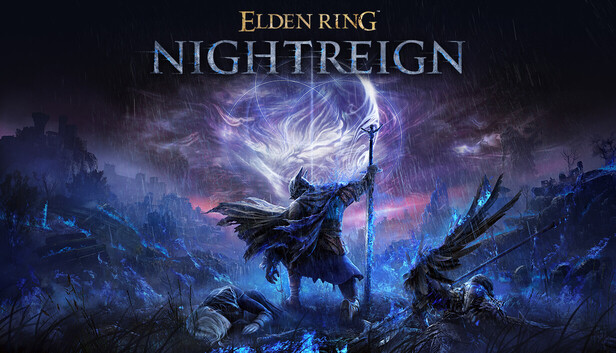
Elden Ring Nightreign
tl;dr: Nightreign should have been sold as DLC, dubbing “a roguelike boss-rush co-op expansion”, not as a standalone game.
Rogueli(k|t)e
Well, roguelike is a thing. Actually, it has been a thing for a decade now. I can see why AAA studios have been jumping onto this train lately.
I’m not old enough to have played the first roguelike, Rogue (1980), and honestly, even if I were, I’m not sure I would have enjoyed it. I’m also not fond of the genre reviver Spelunky (2008) either (solely because of its unintuitive control scheme that practically screams “I ran out of buttons.”)
My first real roguelike experience was FTL (2012), though at the time I didn’t even know what “roguelike” was. I just knew the game refused me to reload previous saves to undo mistakes. Every decision stuck, whether good or bad. That alone created tension.
What captivated me, however, was not the permadeath, but how FTL rewarded good decisions tremendously, and punished bad decisions unforgivingly. My 5hrs space career might end with a single misjudgment (looking at you, giant alien spiders). However, when this happened, I understood why and gladly accepted living with my mistakes. The game constantly asked me to evaluate risk vs reward: snowballing my successes, avoiding critical mistakes, but still opening up to risk when the reward was undeniable, all while preparing backup plans… lots of backup plans. That tension between planning, adaptation, and uncertainty is the real joy of roguelikes (pretty much real life, huh?)
Nightreign, however, seems to lack this aspect– especially in the early game –because of the constantly ticking timer. In my runs, I rarely had time to examine newly dropped items thoroughly, let alone comprehend what they actually do. The pressure pushes me to make quick decisions out of panic, not tension.
Seriously, why not stop the timer so we can make a quality decision here? Heck, Hades (2020) stops the timer on the boon-selection screen, which also results in an interesting “in-game time” concept where speedrunners race each other – separating tension in combat from decision making.
Worse still, Nightreign demands route planning from the start. Where to loot first? 2nd? 3rd? You have to mentally plot the whole itinerary right at the beginning of the run. That’s not a learning curve, that’s a concrete wall. This level of planning should be optional for veterans, not mandatory for newcomers.
Boss-rush
If you haven’t played the original Elden Ring, Nightreign will be a hellish experience.
For starters, what are the controls? Basic movement may be universal, but what about sprint/jump/dodge? Attacking with (R1) and (R2) just feels weird. What about the untaught stamina management? Left-hand vs right-hand weapon? The point is, players need time for this onboarding process to a franchise, which is acceptable if this is a slow-paced single-player Souls game. Nightreign just assumes you’ve mastered this right from the start.
Next, the map is practically useless. It has no detail whatsoever to help with navigating the overly complicated 3D terrain: no interior maps of buildings, no “layers” for obvious subareas you can’t traverse to-and-from (lava subarea, fortress on hills). Furthermore, PUBG’s playzone (the overworld’s shrinking circle that deals damage to players outside) is poorly integrated into this world. The world may have a long, narrow trench where, if you fall to the bottom, you’ll be trapped and can do nothing except wait for the circle to kill you. That’s also true for building interiors that are basically 3D mazes with only a few entrances and exits. I mean, this complex world design is great for an RPG you get to explore slowly, not a fast boss-rush with a timer.
Lastly, the boss fights: without prior Elden Ring experience, players will wonder, what’s the “gimmick” of this boss? What’s their moveset? When do I dodge? When do I attack? What type of element/poison/curse should I inflict? This issue is amplified by the tight timer. At the end of a night, newbies might die multiple times while only managing to kill 1 mini-boss, if at all, resulting in under-level and under-gear. Meanwhile, veterans get to kill 4-5 mini-bosses a night, randomly looting a far greater number of useful gear, and breeze through the night’s boss.
This is a classic positive feedback loop (here, “positive” doesn’t mean a good thing – it means the system has momentum to keep going in that direction, whether good or bad). Veteran gamers will love this kind of design, but newcomers will have a hard time improving and enjoying it. Yeah, these frictions are to be expected when you’re starting any new game. But it could be a lot less miserable than this kind of extreme torment.
Co-op
So, how do FromSoft mitigate these issues? They made the game co-op focused, silently & organically appointing veterans as leaders in the hope they’ll guide newcomers.
On paper, this sounds reasonable. In practice, it often makes things worse.
In my first run, I did so badly that my veteran teammates (I assume they’re veterans since they pinged me every 5 seconds to follow them) just abandoned the party at the start of day-2, thinking the run was doomed.
Even worse, in another run where I still wasn’t used to the game, my veteran teammates ignored me completely and went to solo the bosses by themselves (I fell down into the lava section, unable to find a way to climb back up). I still learned nothing.
This is a total lose-lose situation: veterans feel like they’re wasting their time babysitting others, while newbies don’t get a chance to learn and improve.
If I can’t play the game in solo mode (I technically can, but it’s not balanced for a solo experience), or at least summon predictable NPC teammates (like in MHWilds), how can I truly learn and assess my skill?
Take Overcooked (2016), a gold standard for modern co-op game. That game still provides a single-player mode with a totally different mechanic. You control two chefs, one at a time. The catch? When you command one chef to do an attention-demanding task (like chopping), that task takes extra time to finish – so the only reasonable choice is to switch to another chef and assign another task. Yes, it’s not perfect like co-op mode, but it’s well tuned enough to let me achieve 4-star on some end-game levels.
Fine! Nightreign is designed with 3-player co-op in mind. Then how do you actually play the co-op? Unless you’re already somewhat good at the game, playing with total strangers is not an option (as stated above), especially when there’s no voice chat to let players communicate efficiently. Heck, there’s not even bare-minimum text chat, preset chat, or simple thx/sry emotes.
So it’s inevitable that, to play co-op in this game, you mostly have to play with IRL friends, relaying chat via a medium outside the game (e.g., Discord). Which naturally brings us to the ultimate question: how many of your friends are gamers who enjoy hard games, let alone Souls players?
Conclusion
You reborn as the Tarnished, speedrunning the Lands Between dozens of times? Perfect – Nightreign is definitely for you.
You love Souls/FromSoft AND want something new mixed into the genre? Great – Nightreign offers interesting mechanics that will freshen things up.
You have patient friends to carry you, don’t mind losing dozens of runs (if not hundreds)? Sure – Nightreign can be a bond-making experience for your group.
Otherwise, Nightreign is not welcoming you to the franchise.
I’m not saying it’s a bad game, but it feels like an… indie mashup. It’s so ironic that this title is much more niche than indie studios making mainstream roguelikes lol
P.S. on a nitpicking note: you can’t name your character in other languages, only the Latin alphabet and a few punctuation marks.
Originally published on: Steam

author